News
Vertical Balancing Machines
Vertical Balancing Machines
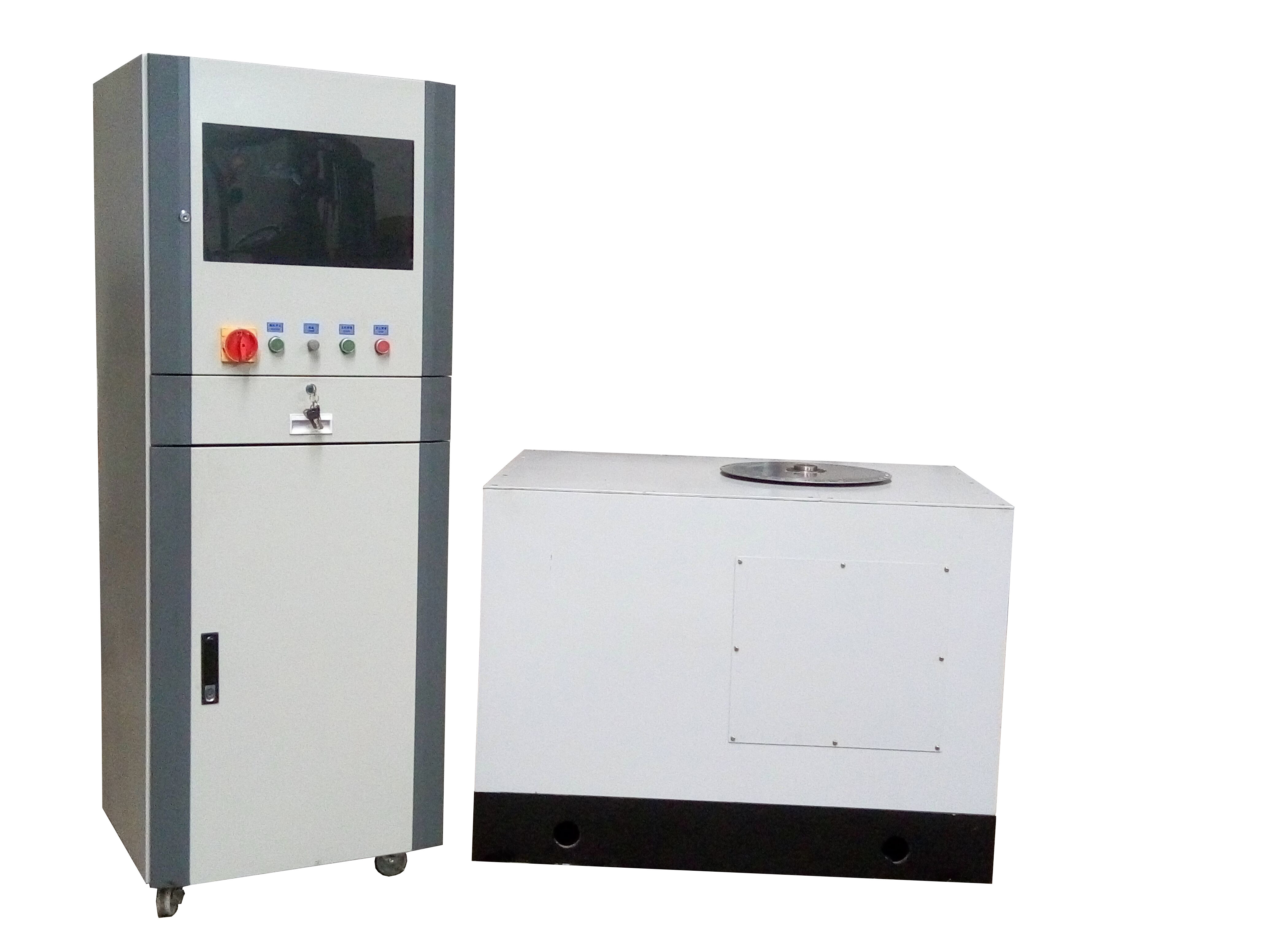
While horizontal balancing machines (like your YYQ/YYW series) are designed for shafts, Vertical Balancing Machines are engineered for disk-shaped or short cylindrical rotors that are better balanced in a vertical orientation.
In these machines, the rotor is mounted on a vertical spindle or fixture, with its axis of rotation aligned vertically (parallel to gravity).
1. Typical Applications
Vertical balancing is ideal for components where the axial length is small relative to the diameter. Common examples include:
-
Fan Impellers (cooling fans, industrial blowers)
-
Flywheels
-
Brake Discs / Brake Drums
-
Pump Impellers
-
Clutch Pressure Plates
-
Circular Saw Blades / Gears
2. Why Choose Vertical?
-
Ease of Loading & Unloading: For disk-shaped parts, placing them vertically onto a fixture is much faster and safer than trying to mount them horizontally, especially when using automated loading systems.
-
Support Stability: Many disk-like rotors are unstable or deform if placed horizontally on rollers. Vertical mounting uses a mandrel or flange to support the part from the center, ensuring it stays concentric during rotation.
-
Correction Access: It provides clear, unobstructed access to the top and bottom faces of the part, which is essential if your correction method involves drilling or milling in specific axial locations.
3. Key Mechanical Features
-
Vertical Spindle: A high-precision rotating spindle that holds the workpiece.
-
Workholding Fixture (Mandrel/Flange): Customized fixtures are used to ensure the rotor is perfectly centered and held securely without runout.
-
Correction Integration: Vertical machines are often integrated directly into production lines. Many models feature built-in automatic drilling or milling units located above the workpiece, allowing for a "Measure & Correct" cycle to happen without removing the part from the machine.
4. Comparison: Horizontal vs. Vertical
| Feature | Horizontal Balancing | Vertical Balancing |
| Rotor Orientation | Horizontal (on rollers/pedestals) | Vertical (on a spindle) |
| Rotor Shape | Long shafts, rotors, crankshafts | Disks, impellers, fans |
| Support Method | Rollers or V-blocks | Mandrel or customized flange |
| Typical Correction | Usually manual/semiautomatic | Highly compatible with auto-drilling |
| Primary Advantage | Versatility for various lengths | Efficiency for mass-producing disks |
【 Go Back 】 | 【 Print 】 | 【 Close this window 】


