Taian AEM Machinery Co.,Ltd
Tel:+86 18888260296
Whatsapp:+86 18888260296

News
Turbocharger Rotor Balancing
Turbocharger Rotor Balancing
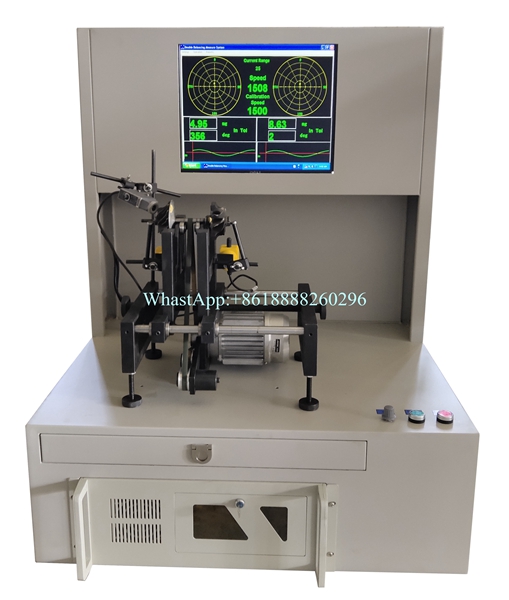
The turbocharger rotor (commonly referred to as the turbine-compressor shaft assembly) is one of the most demanding and precision-critical components in the entire automotive and industrial sectors. Operating at extreme speeds—often ranging from $80,000\text{ RPM}$ to well over $250,000\text{ RPM}$—even a microscopic trace of unbalance can result in catastrophic failure.
1. Why Turbocharger Balancing is Extreme
-
Hyper-Speed Operation: At $200,000\text{ RPM}$, centrifugal forces are immense. A tiny imbalance that is acceptable in an electric motor will cause severe shaft bending, bearing destruction, and wheel-to-housing contact in a turbocharger.
-
Thermal and Mechanical Stress: The turbine side is exposed to scorching exhaust gases, while the compressor side handles high-pressure intake air. Materials expand and shift under these temperatures, making initial high-precision balance non-negotiable.
-
Aero-Acoustic Performance: Unbalance at high RPMs causes high-frequency whining, vibration, and loss of boost efficiency.
2. The Two-Stage Balancing Process for Turbochargers
Because of their extreme speed, turbochargers typically undergo a specialized multi-stage balancing process:
Stage 1: Component & Core Shaft Balancing (Low-to-Medium Speed)
-
The Component: The individual turbine wheel, shaft, and compressor wheel are balanced separately before assembly, or the core shaft assembly is pre-balanced on a specialized high-sensitivity horizontal machine.
-
The Standard: Usually demands ISO G2.5 or tighter.
Stage 2: High-Speed Core Balancing / CHRA VSR (Vibration Sorting Rig)
-
The Process: Once the complete CHRA (Center Housing Rotating Assembly) is assembled, it is tested on a specialized high-speed balancing rig (often called a VSR machine).
-
How It Works: Compressed air drives the turbocharger to its actual operating speeds (simulating real-world conditions up to hundreds of thousands of RPMs). The machine measures vibrations dynamically under oil pressure and indicates exactly where to micro-grind or trim the compressor nut/wheel tip to achieve absolute quietness and stability.
3. Recommended Balancing Solutions (AEM Portfolio)
When providing solutions to turbocharger rebuilders or automotive parts manufacturers:
-
For Shaft Pre-Balancing: Use high-sensitivity Horizontal Balancing Machines (YYQ Series) equipped with special delicate-part tooling to prevent surface damage to the tiny bearing journals.
-
For Complete CHRA / High-Speed Testing: Emphasize self-driven or air-driven high-speed balancing principles that replicate real operating environments.
【 Go Back 】 | 【 Print 】 | 【 Close this window 】
Contact us
ADD: No.96,Changcheng Road,Tai'an City,Shandong Province,China
Official Social Media


