News
Self-Driven Dynamic Balancing Machines
Self-Driven Dynamic Balancing Machines
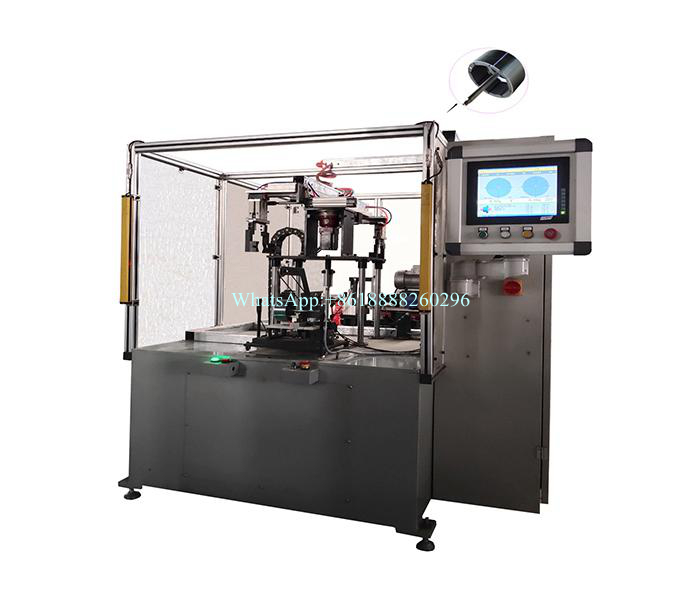
Self-driven dynamic balancing machines are a specialized category where the rotor is rotated by its own power source rather than an external drive mechanism (like a belt or a U-joint shaft). In this configuration, the rotor operates under its own motor, engine, or driving force during the balancing process.
1. How It Works
-
Rotor-as-the-Motor: The rotor is mounted on the balancing machine's pedestals while it is still assembled with its own motor/stator (for electric motors) or engine (for combustion engines).
-
Self-Contained Power: The rotor is connected to a power supply or fuel source, allowing it to accelerate to its operating speed independently.
-
Synchronous Monitoring: As the rotor spins under its own power, the machine’s sensors capture vibration data, enabling the operator to identify imbalances exactly as they occur under real-world operating conditions.
2. Key Advantages
-
Real-World Simulation: This is the most accurate way to balance a rotor, as it eliminates any discrepancies caused by external drive systems (like belt tension or coupling errors). It accounts for the actual operating assembly.
-
Testing Completed Assemblies: It allows for the balancing of complete, integrated units (e.g., a fully assembled motor or a turbocharger with its own housing) that cannot be easily disassembled for individual rotor testing.
-
No External Drive Hassle: There is no need to worry about belt types, pulley diameters, or flange adaptations for specific motor shafts.
-
Elimination of Coupling Influence: Since no external drive system is attached, there is absolutely zero risk of transmission-related vibration or parasitic imbalance signals.
3. Typical Applications
Self-driven balancing is essential when the rotor is inseparable from its driving component or when high-fidelity, in-situ performance is required:
-
Electric Motor Assemblies: Balancing finished motors where the rotor and stator are already assembled.
-
Turbochargers: Balancing the cartridge (CHRA) by using high-pressure air to spin the turbine wheel.
-
Fans & Blowers: Balancing finished industrial fans that have integrated motors.
-
Combustion Engine Crankshafts (In-situ testing): Sometimes used for final verification of finished engines.
4. Technical Comparison
| Feature | Self-Driven | Belt/U-Joint Drive |
| Drive Force | Integrated (Rotor's own motor) | External (Machine's motor/belt) |
| Accuracy | Highest (Real-world simulation) | High (Depends on setup) |
| Setup Complexity | High (Requires power/connections) | Low to Medium |
| Primary Use | Finished assemblies / Precision testing | Component production / Mass balancing |
【 Go Back 】 | 【 Print 】 | 【 Close this window 】


