News
Horizontal Balancing Machines
Horizontal Balancing Machines
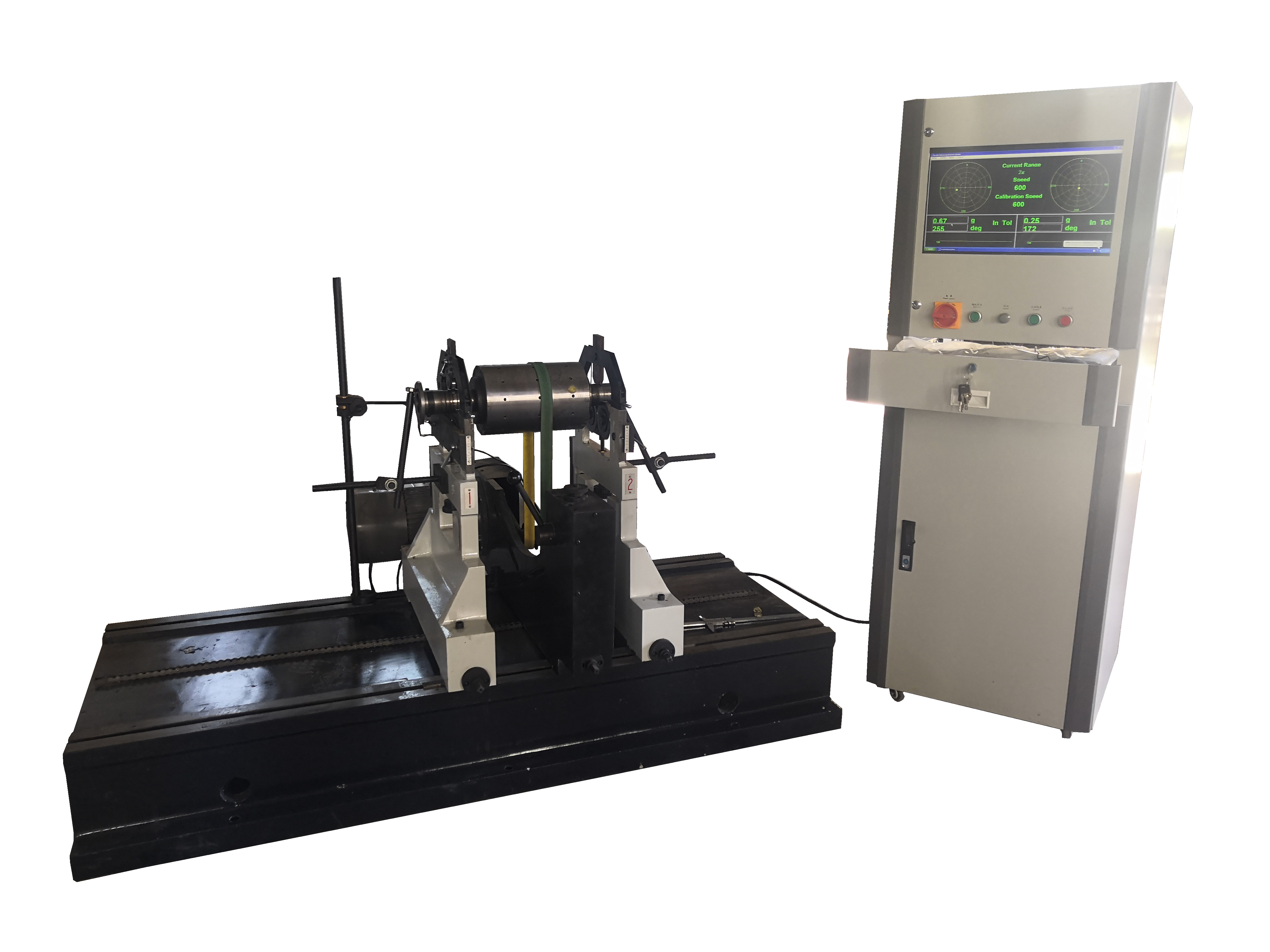
Horizontal Balancing Machines are the most common type of industrial balancing equipment. In this configuration, the rotor's axis of rotation is positioned horizontally (parallel to the ground) and is supported by two pedestals (bearing supports) at either end.
This design is the "workhorse" of the industry, used for the vast majority of rotating machinery components that have a shaft-like geometry.
1. Typical Applications
These machines are designed for rotors with a significant axial length. Typical applications include:
-
Electric Motor Rotors & Armatures
-
Crankshafts (Automotive and Marine)
-
Drive Shafts (Propeller Shafts)
-
Industrial Rollers (Paper, Printing, Textile)
-
Turbochargers
-
Centrifugal Pump Shafts
-
Large Industrial Fans & Blowers
2. Key Structural Features
-
Two Pedestals (Bearing Supports): These support the rotor at its journal points. They can be moved along the bed of the machine to accommodate rotors of different lengths.
-
Bed (Base): A rigid, heavy-duty frame (often cast iron) that serves as the foundation. High stiffness is critical to minimize vibration interference from the floor.
-
Drive System: Depending on the machine model, this can be Belt-Drive (YYQ) or Universal Joint Drive (YYW).
-
Sensors: Typically high-sensitivity force transducers mounted within the pedestals to measure unbalance in two separate planes simultaneously.
3. Why Choose Horizontal?
-
Simplicity in Support: Most shaft-like rotors have existing bearing journals that can rest directly on the machine's rollers.
-
Two-Plane Balancing: Horizontal machines are inherently designed to measure and correct unbalance in two planes (left and right), which is essential for long, narrow rotors where a "couple" imbalance is likely to occur.
-
Versatility: The adjustable pedestals allow one machine to handle a wide range of rotor lengths, making it ideal for job shops or manufacturers with diverse product portfolios.
-
Ease of Correction: Access to the entire length of the rotor makes it easy for the operator to perform weight removal or addition at any point along the shaft.
4. Categorization by Drive Type
Horizontal balancing machines are usually grouped by how they transmit power to the rotor:
-
YYQ Series (Belt-Drive): Best for smooth, cylindrical rotors. Fast and accurate, with no drive-related interference.
-
YYW Series (Universal Joint Drive): Best for heavy, high-torque rotors or those with irregular shapes/flanges that cannot be driven by a belt.
【 Go Back 】 | 【 Print 】 | 【 Close this window 】


