Taian AEM Machinery Co.,Ltd
Tel:+86 18888260296
Whatsapp:+86 18888260296

News
Flywheel Balancing
Flywheel Balancing
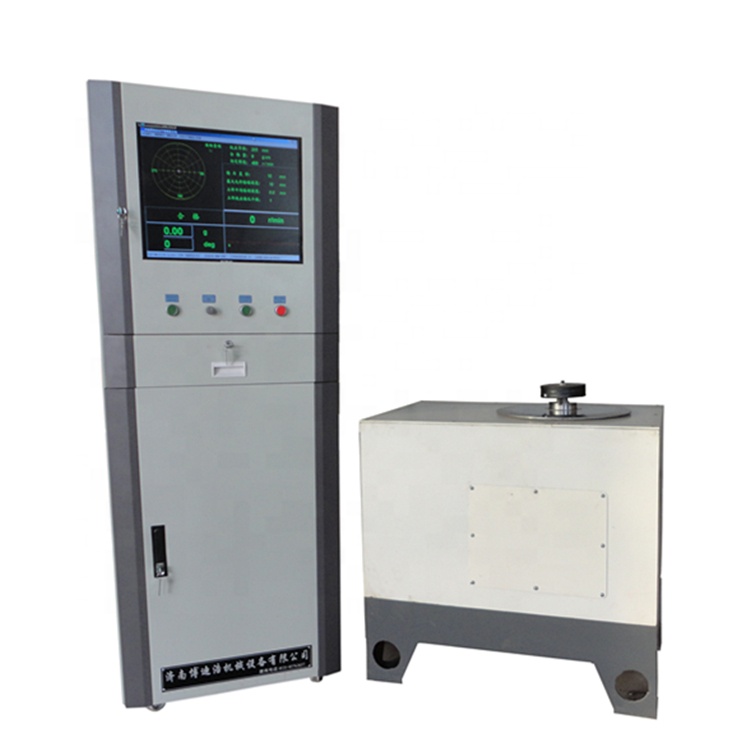
The flywheel is a heavy rotating disk or wheel used in internal combustion engines, punch presses, and industrial machinery to store rotational energy, smooth out power delivery, and maintain constant angular velocity. Because flywheel assemblies are large, heavy, and rotate at high speeds, dynamic balancing is essential to prevent destructive vibrations and bearing failure.
1. Key Challenges in Flywheel Balancing
-
High Mass & Moment of Inertia: Flywheels are designed to store energy, meaning they possess significant mass concentrated around their outer rim. Any asymmetry in weight distribution results in massive centrifugal forces.
-
Complex Composite Assemblies: In automotive and industrial applications, the flywheel often integrates a starter ring gear, a clutch mating surface, or a mounting interface for a torque converter/pressure plate. The cumulative assembly must be balanced to perfection.
-
Thermal and Mechanical Stress: Clutches generating friction or high operational RPMs put severe stress on flywheels, making balance stability non-negotiable.
2. Recommended Balancing Approach
Because flywheels are disk-shaped components with a short axial length, the ideal setup depends on production volume:
A. High-Volume Mass Production
-
Recommended Machine: Vertical Balancing Machines with Integrated Correction (Drilling/Milling).
-
Why: For automotive flywheels, flexplates, and industrial pulleys, vertical machines allow the part to rest flat on a high-precision mandrel. Integrated automatic drilling units can remove material from the heavy spots in seconds, achieving rapid cycle times.
B. Heavy-Duty / Large Industrial Flywheels
-
Recommended Machine: Horizontal Balancing Machines (YYQ or YYW Series).
-
Why: For massive industrial flywheels mounted on heavy shafts (such as those used in large generators, stamping presses, or marine engines), horizontal setup with a rigid bed and custom arbors provides the required structural support and multi-plane correction capability.
3. The Balancing & Correction Process
-
Precision Mounting: The flywheel must be centered using its exact locating bore or pilot diameter to eliminate runout errors.
-
Measurement: The balancing machine spins the flywheel to calculate the precise magnitude and angular location of unbalance across the correction planes.
-
Correction Methods:
-
Material Removal (Drilling): Drilling blind holes into the outer rim or back face of the flywheel counterweight sector. This is the industry standard for automotive flywheels.
-
Milling: Pocketing material from designated correction zones.
-
Adding Balance Weights: In some heavy industrial applications, balancing blocks or weights are welded or bolted onto the rim.
-
【 Go Back 】 | 【 Print 】 | 【 Close this window 】
Contact us
ADD: No.96,Changcheng Road,Tai'an City,Shandong Province,China
Official Social Media


