Taian AEM Machinery Co.,Ltd
Tel:+86 18888260296
Whatsapp:+86 18888260296

News
Drive Shaft Balancing
Drive Shaft Balancing
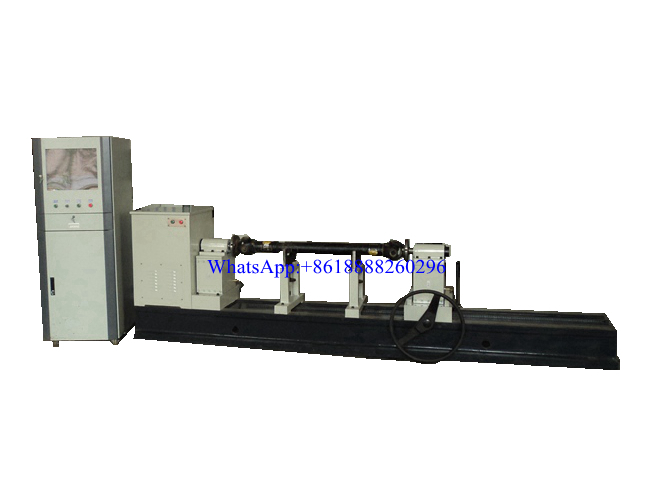
The drive shaft (also known as the propeller shaft or prop shaft) is essential for transmitting torque from the transmission to the wheels or industrial machinery. Because drive shafts are often long, hollow, and rotate at high speeds, they are highly susceptible to critical speed vibrations and "shaft whip."
1. Why Drive Shaft Balancing is Critical
-
High Length-to-Diameter Ratio: Because drive shafts are long and slender, any slight imbalance causes the shaft to deflect (whip) at high RPMs. This creates violent vibrations that can destroy universal joints, transmission output bearings, and differential pinion bearings.
-
Component Accumulation: A drive shaft is rarely just a single tube; it includes welded yokes, flanges, and universal joints. Balancing must address the cumulative unbalance of the entire assembled unit.
-
Operating Speed: Drive shafts often rotate at engine speeds or higher (in overdrive gears), making high-speed stability vital for vehicle safety and comfort.
2. Recommended Balancing Approach
Because drive shafts are long, heavy, and have flanges or yokes at the ends, they require Horizontal Universal Joint Drive Machines (YYW Series).
-
Why YYW is the standard:
-
Rigid Drive: The U-joint coupling ensures the shaft is driven at the exact speed required for precise measurement.
-
Support & Clearance: The machine's pedestals are designed to accommodate the universal joints and flanges of the drive shaft, ensuring the shaft is supported at its natural bearing points.
-
Multi-Stage Balancing: Drive shafts often have distinct "planes" for correction (the center tube, the weld yokes, and the flange ends). Horizontal machines allow for easy access to these points for weight addition or removal.
-
3. Correction Methods
-
Welding Balance Plates: The most common method. Small steel plates are welded onto the shaft tube at the light spots identified by the machine.
-
Adding Weight Clips: Often used on the tube or yokes to achieve final calibration.
-
Drilling/Milling: Used on the flanges or yokes if necessary, though welding plates is generally preferred for drive shaft tubes to maintain structural integrity.
4. Technical Guidance for Clients
When pitching to automotive driveline manufacturers, heavy-duty truck shops, or industrial assembly lines, focus on these points:
-
Elimination of High-Speed Vibration: "Our machines identify the specific vectors of imbalance that cause high-speed vehicle 'shudder,' ensuring a smooth, vibration-free driving experience."
-
Structural Durability: "We offer specialized support tooling for all standard universal joint types, ensuring your drive shafts are balanced precisely as they sit in the vehicle."
-
Production Consistency: "Our YYW series is built for the high-torque, heavy-duty requirements of truck and industrial drive shafts, providing the repeatability your quality control standards demand."
【 Go Back 】 | 【 Print 】 | 【 Close this window 】
Contact us
ADD: No.96,Changcheng Road,Tai'an City,Shandong Province,China
Official Social Media


