Taian AEM Machinery Co.,Ltd
Tel:+86 18888260296
Whatsapp:+86 18888260296

News
Compressor Rotor Balancing
Compressor Rotor Balancing
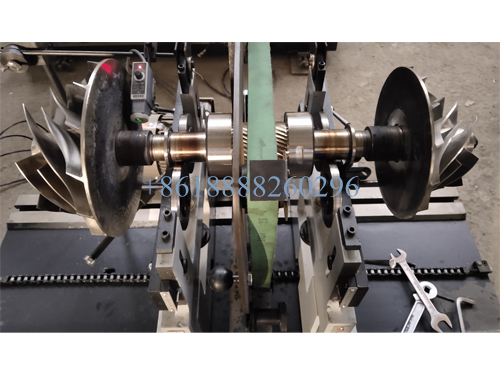
The compressor rotor is a core component in industrial air compressors, refrigeration systems, gas compressors, and turbo-machinery. Whether dealing with high-speed centrifugal compressors, screw compressors, or multi-stage axial compressors, precision balancing is vital to ensure continuous operation, high pressure ratios, and long-term reliability.
1. Key Challenges in Compressor Rotor Balancing
High Operating Speeds & Continuous Duty: Compressors often run continuously at high RPMs. Inefficient balancing leads to continuous vibration, which rapidly degrades high-precision gas seals, labyrinths, and bearings.
Tight Clearances: Modern compressors operate with extremely tight clearances between the rotating impellers/screws and the stationary housing to maintain high volumetric efficiency. Even slight shaft deflection or unbalance will cause rubbing, resulting in catastrophic internal damage.
Complex Multi-Stage Configurations: Many centrifugal compressors feature multiple impellers mounted sequentially on a single shaft. The cumulative unbalance across all stages must be meticulously corrected in multiple planes.
2. Recommended Balancing Approach
Depending on the compressor design, balancing is typically divided into two categories:
A. Centrifugal Compressor Rotors (Impellers & Shaft Assemblies)
Recommended Machine: Horizontal Precision Balancing Machines (YYQ Belt-Drive or YYW U-Joint Series).
Why: Centrifugal compressor rotors require two-plane (dynamic) balancing to eliminate both static and couple unbalance. Belt-drive machines (YYQ) are often preferred for lighter, high-speed impellers to avoid any transmission interference, while large industrial compressor shafts utilize high-torque universal joint systems (YYW).
B. Twin-Screw Compressor Rotors
Recommended Machine: Specialized horizontal balancing setups designed for intermeshing lobes/screws.
Why: Screw compressors rely on precise synchronization between male and female rotors. Balancing must ensure that weight distribution does not disrupt their delicate meshing profiles.
3. The Balancing & Correction Process
1) Low-Speed / Pre-Assembly Balancing: Individual components (such as individual impellers or the bare shaft) are balanced separately before assembly to ensure baseline accuracy.
2) Final Assembly Dynamic Balancing: The fully assembled compressor rotor is placed on the horizontal balancing machine. High-sensitivity sensors measure vibrations at both bearing journals simultaneously.
3) Correction Methods:
- Material Removal: Carefully milling or drilling designated balancing pockets on the shroud or back disc of the compressor impellers.
- Weight Addition: Adding precision balancing pins or balancing plugs into pre-machined slots on the rotor ends.
【 Go Back 】 | 【 Print 】 | 【 Close this window 】
Contact us
ADD: No.96,Changcheng Road,Tai'an City,Shandong Province,China
Official Social Media


